How to Get More Customers From Your Restaurant Instagram (Without Posting More)

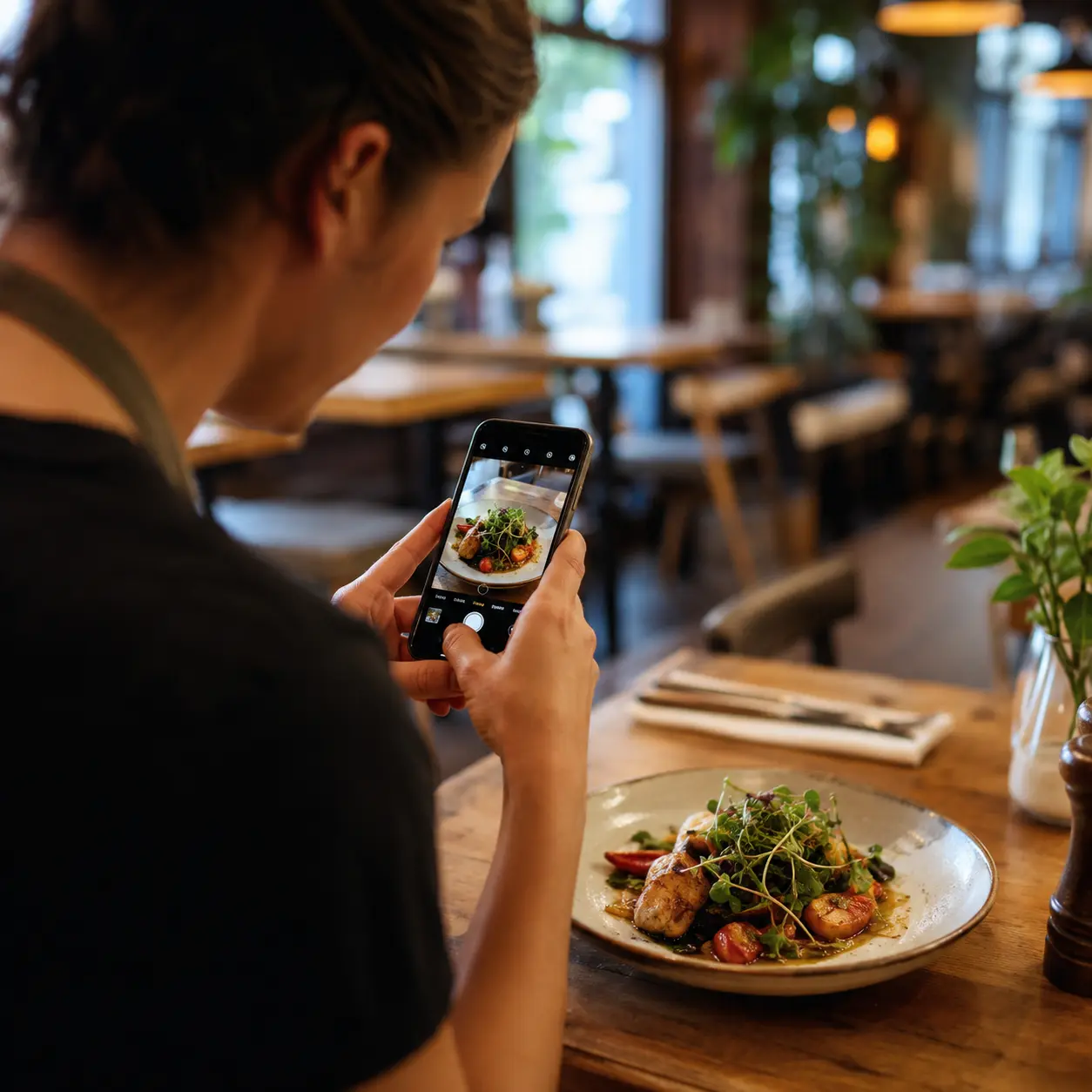
You posted every day for a month because someone told you that's how you get more customers from restaurant Instagram. Stories in the morning, a plated shot at lunch, the kitchen closing down at night. A month later your reservations looked exactly the same, and your restaurant Instagram account just had more posts on it with nothing to show for them.
Why Posting More Doesn't Fix Your Restaurant Instagram Problem
That's the moment most restaurant owners either give up on restaurant social media entirely or double down, posting even more, hoping the next thirty days will be the ones that finally work.
Here's the math nobody explains to you when they hand out the "post consistently" advice. If a photo gets four likes and two comments out of your six hundred followers, posting three more photos like it doesn't multiply your results. It multiplies your invisible posts. Four low-engagement posts a week add up to the same nothing as one low-engagement post a week, just spread out over more days.
A diner scrolling past a dim shot of your Tuesday special, taken under fluorescent kitchen light, doesn't think "I'll check back when they post again." They don't think about your restaurant at all. The scroll continues, and Instagram takes note. A post nobody stops for tells the platform this account isn't worth showing to many people, which means your next post starts from an even smaller stage than the one before it.
This isn't a volume game. A restaurant posting twice a week with photos that stop people cold will outperform one posting daily with photos that don't, every time. Owners who feel like they're working harder and getting less are usually doing exactly this: adding more of the thing that was never the problem.
Think about two taco counters three blocks apart, each posting five times a week. One posts rushed shots of the same three tacos over and over, the other posts photos where the salsa verde is glistening and the carnitas has visible char on the edges. Both are putting in the same effort: five posts, five captions, five trips to hit the upload button. Only one of them is building an account that shows up in more feeds every week.
What Instagram Actually Rewards (and What It Doesn't)
Picture your account getting handed a small stack of business cards, maybe fifty out of your six hundred followers, and Instagram watching to see what happens next. If enough of those fifty stop scrolling, like, comment, or save, the platform hands you another stack. If most of them scroll past, the stack stops coming, and that post is done for the day.
Nobody in that first fifty ever reads your caption before deciding whether to stop. They don't see your hashtags. They don't notice you tagged your location. All three are invisible until a thumb pauses, and a thumb only pauses because of what the photo is doing in that split second, not because of anything written underneath it.
That's the part of the algorithm worth understanding, and it's also the last time this post is going to lean on that word. You don't control what Instagram decides to do with your post. You control what happens on the plate, on the counter, and in the frame before anyone gets far enough to read a single word you wrote. That's the only lever that's actually yours, and it's the one most restaurant Instagram advice skips completely in favor of caption formulas and hashtag lists. (For the full technical breakdown, Later's guide to how those ranking systems work is worth a look.)
When a post clears that first small audience, it starts showing up to people who have never heard of your restaurant, on their Explore page or in their Reels feed. That's where new customers actually come from, not from the six hundred people who already follow you and already know where to find you.
The One Change That Actually Gets Your Restaurant More Instagram Customers
Time of day doesn't decide whether your post gets traction. Neither does your hashtag count, or how many accounts you follow back this week, or whether you used three emojis or none. The only variable that consistently moves the needle is whether the photo itself earns a pause.
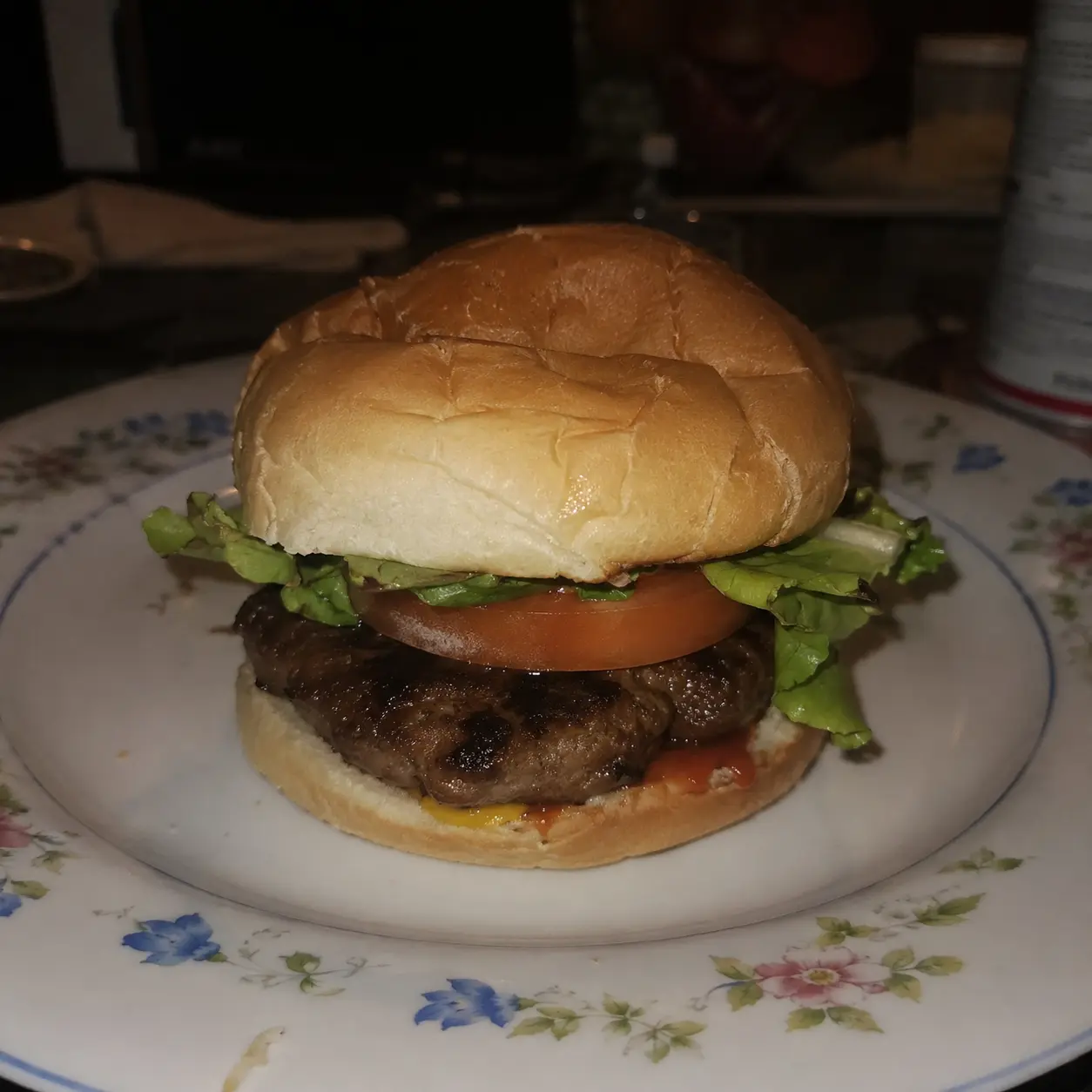
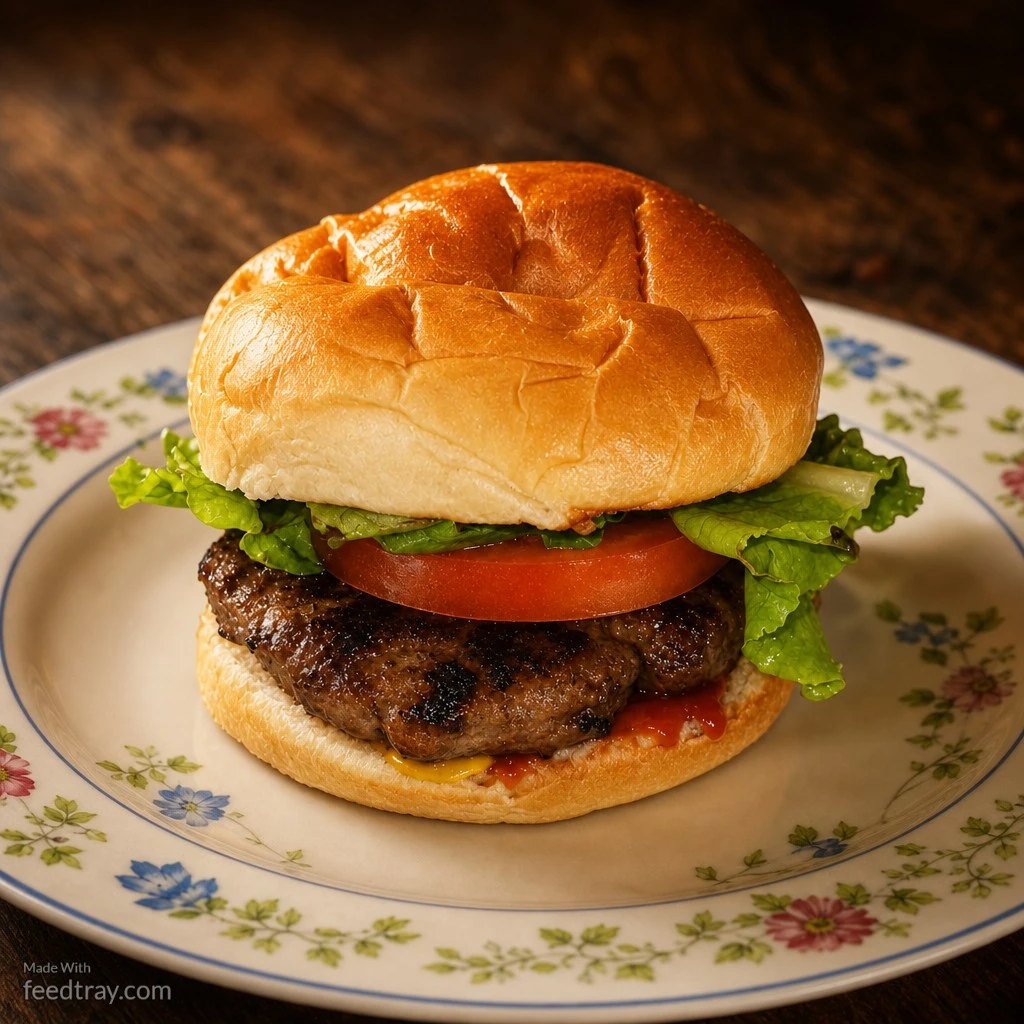
Before and after comparison of a restaurant food photo, showing what actually gets more customers from Instagram
A photo that earns a pause usually has steam still rising off the plate, or a fork caught mid-bite pulling a string of cheese, or a sear mark catching light at an angle that makes the char look like it just came off the grill. It might be the pull of melted cheddar mid-lift on a burger, or a loaf photographed the second it comes out of the oven, still dusted with flour. The colors separate instead of blur together; your marinara doesn't disappear into your terracotta plate, and your plate doesn't disappear into your wood table. There's one clear subject, not a cluttered pass window with three tickets and a bottle of hot sauce crowding the edges of the frame.
A photo that gets skipped is usually shot straight down under the same overhead light you use to read invoices, on a stainless counter that reflects everything the same flat white, slightly out of focus because it was snapped one-handed on the way to table twelve. Nothing in that photo asks for a second look, so it doesn't get one, and everything else you did right that day, the caption, the timing, the hashtags, never gets the chance to matter.
How to Fix Your Photos Without Adding More Work
Some of this you can fix today with zero extra time.
Shoot near a window instead of under the kitchen's overhead lights. Aim for the few feet closest to the glass, ideally mid-morning or a couple of hours before sunset, when the light is softer and doesn't blow out the highlights on a sauce or a glaze. If the sun is harsh and direct, angle the plate so the light comes from the side instead of straight on, and use a white apron or a stack of to-go bags as a makeshift bounce card to fill in the shadows. Natural light does more for a dish in three seconds than any filter does in three minutes.
Move the ticket printer, the napkin dispenser, and the bottle of hand sanitizer out of frame before you shoot. A plain cutting board, a sheet pan, or a clean section of the pass counter makes a better backdrop than whatever surface happens to be closest, because a cluttered background is the fastest way to make a great dish look like an afterthought. Wipe the rim of the plate before you shoot, too; a smear of sauce on the edge reads as sloppy even when the food itself is perfect.
Shoot the dish the moment it's plated, before it heads to the pass, not mid-service once the steam has died down and the sauce has started to pool. If you're running a special today, designate one ticket as "the photo plate" during your pre-shift lineup and shoot it the second it's ready, at whatever window or corner you've already decided has the best light. That turns photography into a ten-second detour instead of a production you have to find time for later.
Those three habits, plus the food photo tips for restaurants in our first post on this, will get you further than another month of generic Instagram for restaurants advice. But here's the honest part: even doing all three, most restaurant owners still hit a wall, because the environment they're shooting in is working against them. Your dining room lighting is warm and flattering for guests and terrible for photos. Your kitchen lighting is bright, even, and completely flat. The ten minutes before a Friday dinner rush, when the plate looks its best, is also the ten minutes you have the least time to think about composition. You can follow every restaurant Instagram tip in the world and still be fighting a kitchen that wasn't built with a camera in mind.
How Restaurants Are Getting More Customers From Instagram Without Extra Work
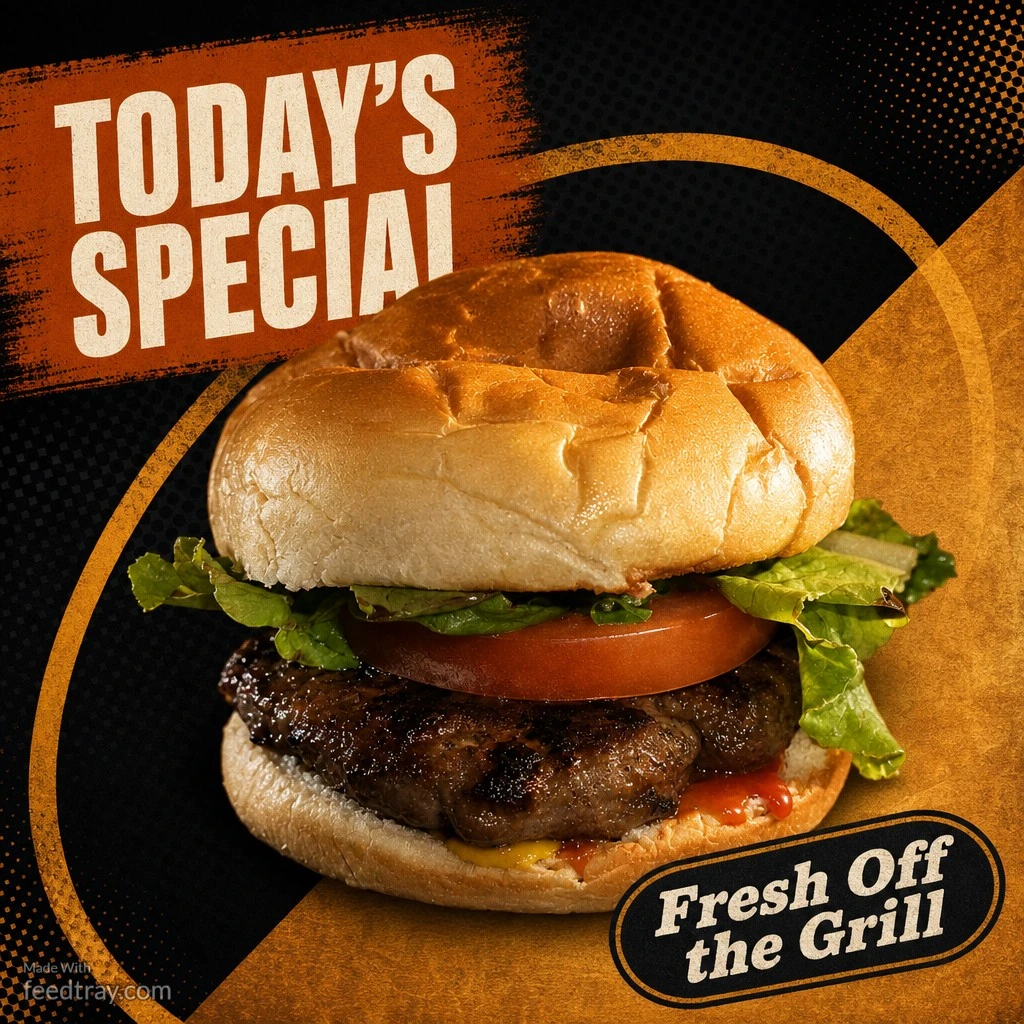
riversidegrill Fresh off the grill and it shows.
Today's special is here — juicy beef patty, crisp lettuce, thick-cut tomato, all locked between a pillowy bun that somehow holds it together.
Tag someone who needs this in their life today. 🍔🔥
The owners who've actually turned this around aren't buying better gear or blocking off an hour for a mini photoshoot between lunch and dinner prep. They're taking the same phone photo they'd have grabbed anyway, one-handed on the way back to the kitchen, and running it through Feedtray. The lighting gets corrected, the background gets cleaned up, the composition gets fixed, and a caption that actually sounds like their restaurant comes out the other side, all in about thirty seconds, from the same phone, without opening an editing app or learning a new skill. It's the difference between hoping this week's post is the one that finally works and knowing the photo is already doing its job before you hit publish.
Your restaurant Instagram isn't broken, and it was never going to be fixed by a stricter posting schedule. The owners pulling more tables and more online orders out of their feed right now aren't spending more hours on their phones than you are. They found the one change that actually gets you more customers from restaurant Instagram: the photo has to earn the pause before anything else you do can matter. Fix that, and the same eight posts a month you're already managing to get out the door will start doing what thirty never did.