How to Get More Coffee Shop Customers From Instagram

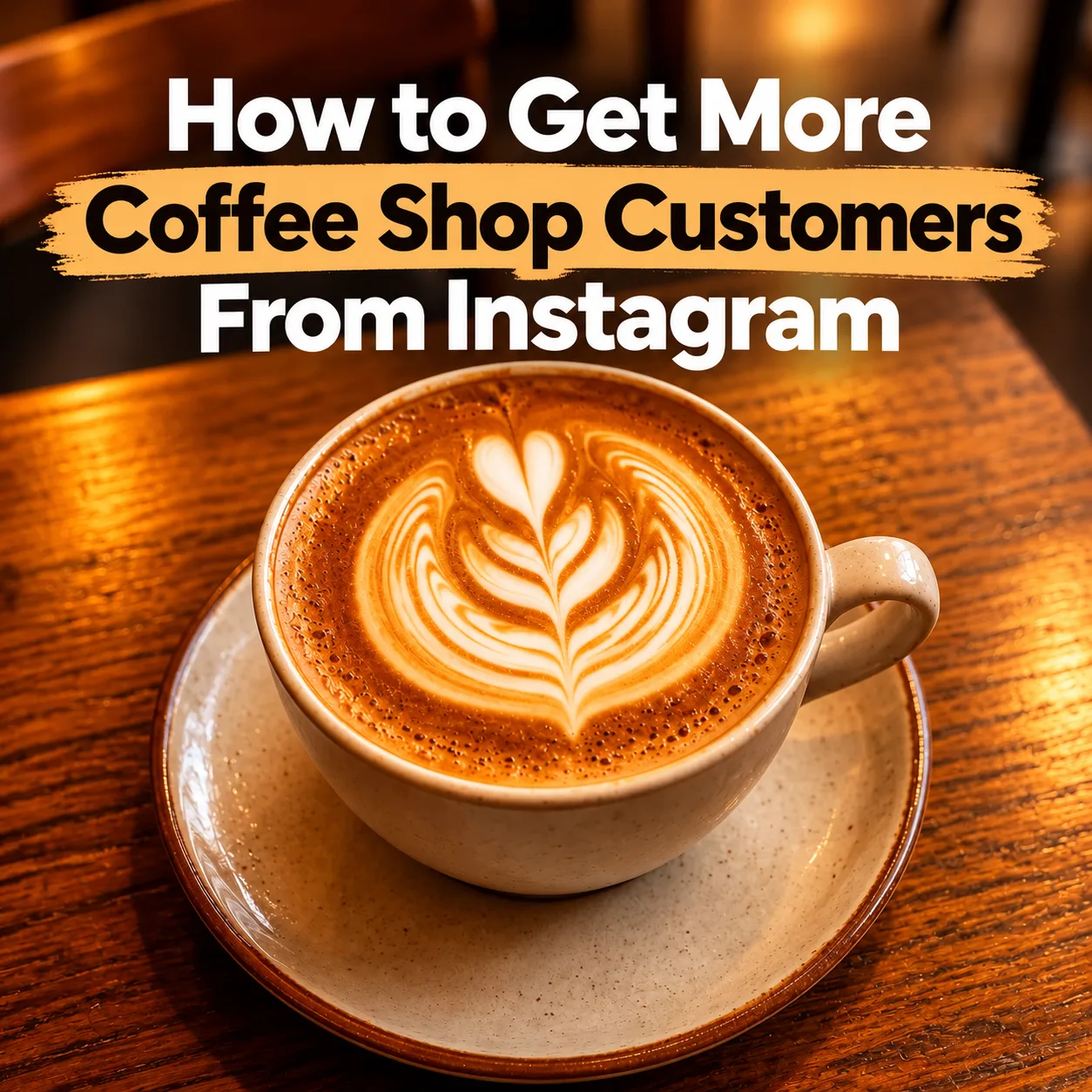
You dialed in the grinder at 6:40 this morning, pulled a shot that tasted like dark chocolate and cherries, and poured a rosetta you were genuinely proud of. Then you watched three people walk past your window to the chain on the corner, and you started wondering how to get more coffee shop customers from Instagram when your account looks nothing like the place you've built. The coffee is better. The room is better. The photos just haven't caught up yet, and that is a very fixable problem.
Why Instagram Works Differently for Coffee Shops Than for Any Other Food Business
A restaurant needs to fill tables a few nights a week. A coffee shop needs the same people through the door every single morning. That one difference changes everything about how Instagram for coffee shops should work.
A restaurant's Instagram is mostly a recruiting tool. It wins when a stranger sees a plate of short rib and books for Saturday. Your coffee shop Instagram has a quieter, more valuable job: getting into the daily mental landscape of the people who already live and work within ten minutes of you. The nurse coming off a night shift. The designer who works from home on Tuesdays. The dad doing school drop-off two streets over. When any of them thinks "coffee," you want your cup to be the picture in their head, not the green logo.
That is a habit, and habits are built on repetition, not one big moment. Three things do the building.
Consistent presence. Your posts become part of someone's morning scroll the same way your shop becomes part of their morning walk. If you post twice in March and vanish until June, you are a stranger again.
A recognizable look. Your followers should know it's your post before they read the handle. Same light, same tones, same cups. Recognition is what turns a follower into someone who feels like they know the place.
Content that makes people feel like regulars before they've walked in. When someone has already seen your barista Maya's oat flat white, knows the window seat gets the 9am sun, and watched you test the maple cardamom latte in Stories, walking in for the first time doesn't feel like walking into a new place. It feels like finally showing up.
That last point is the real shift. The goal isn't one visit. It is becoming somebody's place.
The Coffee Shop Photo Problem Nobody Talks About
Coffee is one of the hardest things in the food world to photograph, and nobody warns you. A restaurant plate has color: green herbs, a red sauce, a golden crust. Your best work is brown, beige, and white, sitting in a room deliberately lit to feel cozy.
Dark roasts go flat. A phone camera sees a cup of espresso as one dark brown blob. The amber edge of the crema, the tiger striping in a good shot, all of it gets averaged into mud.
Latte art loses its contrast. In person, a tulip pops because of the line between white microfoam and dark espresso. On a phone under warm light, that line softens and the whole thing reads as a beige circle.
Steam disappears. The wisp curling off a fresh pour-over is what makes a photo feel hot and alive. Against a busy background in dim light, the camera simply doesn't see it.
Your best light is your camera's worst light. Edison bulbs, low pendants, and that soft morning glow through the front window are exactly why your shop feels good to sit in. They also push phone cameras into grain, orange casts, and muddy shadows.
You get about thirty seconds. A restaurant can rest a plate under the pass for a photo. Your crema starts fading and your foam starts settling the moment the cup hits the counter, usually with a line of people waiting.
So the photo that came out slightly dark, the rosetta that lost its edges, the seasonal drink that looked like weak tea: none of that is a talent problem. It is a light problem, and it is the exact problem Feedtray fixes in one click. You upload the photo you already took, and Feedtray corrects the lighting, restores the contrast in the milk and espresso, and brings back the warm tones your eye actually saw. It is still your real cup, just looking the way it did on the bar.
If you want to get more out of the shot before you even upload it, our guide on how to take better food photos for Instagram covers angles and setup that work in tight spaces.
What Actually Gets Coffee Shop Customers From Instagram
Four kinds of posts do almost all the work of turning followers into coffee shop customers. Here is what each looks like when it falls flat, and what it looks like when it makes someone change their route to work.
Seasonal and limited drinks. This is your highest-performing content, because a seasonal drink gives people a reason to come in this week that won't exist next month. Most shops waste it.
Weak post. Photo: a pumpkin spice latte shot from across the bar, slightly dark, menu board blurry behind it. Caption:
Fall is here! 🍂 PSL is back! #pumpkinspice #coffee #fall
Strong post. Photo: a close shot at a slight angle, the orange-brown of the drink visible through a glass mug, a dusting of nutmeg on thick foam, window light from the left. Caption:
Our pumpkin latte isn't the syrup kind. We roast real sugar pie pumpkins every Monday, cook them down with brown sugar, cinnamon and a little clove, then pull a double shot of our Colombian over it. Tastes like the inside of a pie, not a candle.
Here through October 31, then it's gone until next year.
The second post names the ingredients, tells you how it tastes, and gives you a deadline. That is three reasons to come in, written in a voice nobody at the chain is allowed to use.
Latte art. Most shops already post this and almost all of them get it wrong. The art is fine. The angle and the light are not. What works: a slight angle (around 30 to 45 degrees, not straight down) so you can see the depth of the cup, light coming from the side so the foam casts a tiny shadow and the pattern gains edges, and a background that's cleared of everything except maybe the saucer and a bit of wood grain.
Weak post. Photo: a latte shot straight down on the bar, a receipt, a vanilla syrup bottle and a stack of lids in frame, overhead light washing it out. Caption:
Latte art Monday ☕ #latteart #baristalife
Strong post. Photo: same latte, moved to the window ledge, cup angled toward the light, background just the blurred street outside. Caption:
Jonah's been chasing a seven-layer tulip for three weeks. This morning at 7:52, he got it. It went to a regular named Ruth, who drank it before he could tell her.
Ask him for one tomorrow. He's insufferable about it now.
Now the latte has a person behind it, and the follower has a reason to walk in and ask for something by name.
The space and the feeling. This is the most underused content in coffee shop Instagram, and it might be the most powerful. People don't only choose a coffee shop for the coffee. They choose it for how it feels to sit there for forty minutes with a book.
Weak post. Photo: a wide shot of the whole room from the doorway, ceiling lights on, chairs empty, a mop bucket in the corner. Caption:
Come visit our cozy space! Open 7am to 4pm daily.
Strong post. Photo: one corner table by the window, rain on the glass, a half-finished cortado and an open paperback, the steam wand blurred in the background. Caption:
Rainy Thursday, and the window table is free. Nobody's going to rush you out of it.
The weak post shows a room. The strong post shows a morning someone wishes they were having, and tells them it's available right now.
Behind the bar. Craft builds trust in a way a finished drink can't. Keep it simple. Instead of another photo of a flat white, post a ten-second clip of your barista weighing 18 grams of a new Ethiopian, tamping, and pulling the shot, with the caption: "18 in, 38 out, 29 seconds. This is the new Yirgacheffe. Blueberry, black tea, a little lemon. On the bar starting tomorrow." The coffee people will come in to try it. Everyone else will just trust you a little more.
The Caption Formula That Works for Coffee Shops
A restaurant caption usually sells a specific dish for a specific night. A coffee shop caption has a softer, longer job: it builds a feeling and a habit. (If you also run food service in the evenings, our guide on how to write Instagram captions for restaurants that actually get clicks covers that side.)
A good coffee shop caption does three things, in this order.
Put them in the moment. One or two sentences that make the reader feel the cup, the room, or the hour. Not a description of the drink. The experience of having it.
Give them a small sense of ritual or belonging. Mention a regular, a barista by name, a time of day, a thing "we" do every week. This is what makes followers feel like insiders.
End with one reason to come in or one question. Either a clear nudge ("on the bar until Sunday") or a question that's easy and fun to answer. Never both, and never a list of five things.
Here's how that plays out.
Seasonal drink.
Flat version:
New maple cardamom latte now available. Ask your barista!
Feeling-and-action version:
First cold morning of the year, so we made the drink we've been testing since August. Vermont maple, fresh-cracked cardamom, a double shot of the house blend. Warm like a wool sweater.
On the bar through November. Tell us honestly: hot or iced?
Morning latte art.
Flat version:
Rosetta for our first customer this morning ☕
Feeling-and-action version:
6:58am. Doors open in two minutes and Dan is already waiting outside with his dog, same as every Wednesday. His oat cortado is ready before he gets to the counter.
What's your order? We'll start learning it.
Rainy day atmosphere.
Flat version:
It's raining! Come warm up with us.
Feeling-and-action version:
Rain all afternoon, the radiators are on, and the big armchair by the bookshelf is empty. We've got your seat, and there's a fresh batch of cardamom buns out at 2.
Notice what the strong versions don't do. They don't shout, they don't list hashtags, and they don't beg. They describe a morning someone wants to be part of, then leave the door open.
What the Difference Looks Like
The gap between a coffee shop photo that makes someone need to be there and one that just shows a drink almost always comes down to light and background. The milk is the same. The pour is the same. What changes is whether the photo makes someone feel something.
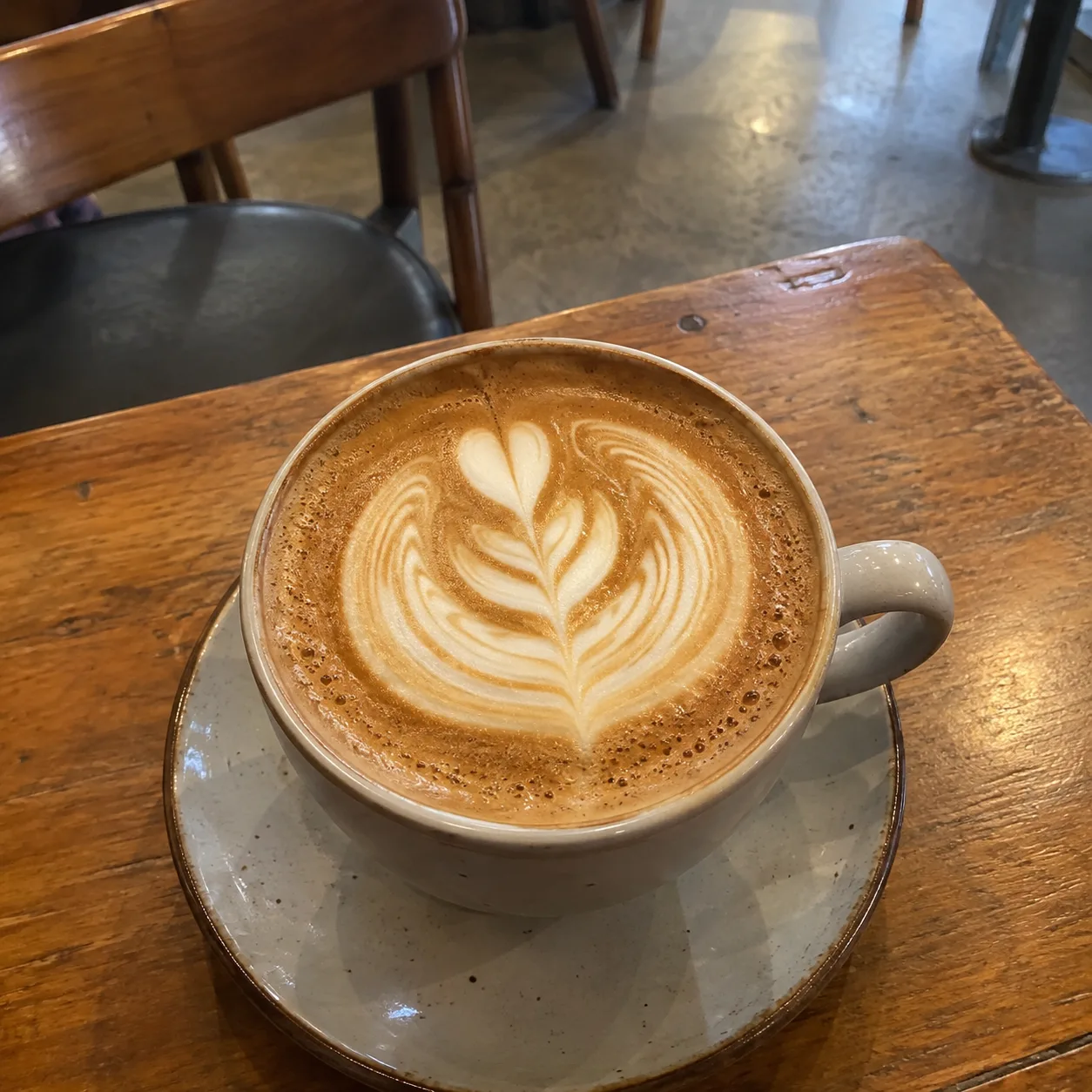
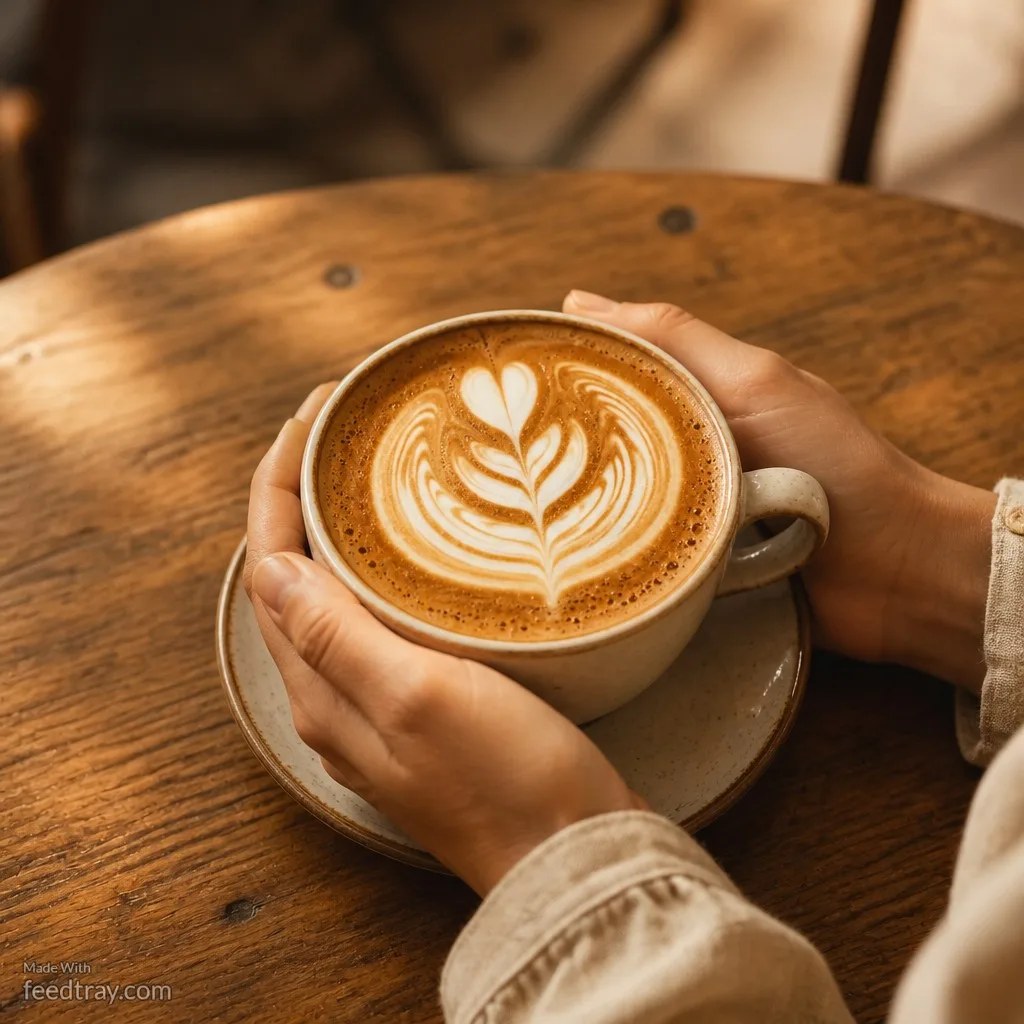
Before and after latte photo enhanced with Feedtray showing how to get more coffee shop customers from Instagram
The second one is the photo that makes someone put on their coat and walk over.
How to Build a Coffee Shop Instagram People Actually Want to Follow
Great individual posts get attention. Habits are what turn that attention into regulars. Five of them matter most, and all five fit around a real morning shift.
Post when your people are deciding. Your customers choose their coffee between 6:30 and 8:30am, usually while still in bed or on the bus. Post in that window, on the same days each week, and your shop shows up right when the decision is being made. Shoot during the 10am lull, schedule for the next morning. Do that three times a week and your shop becomes a fixture in their morning before they have even decided to come in.
Pick one light and stick to it. Choose one spot in the shop, ideally a window, and shoot most of your drinks there at roughly the same time of day. Same surface, same angle, same warmth. Within a month, your grid starts to look like your shop, and followers recognize your posts mid-scroll.
Use Stories for the stuff that's happening right now. The 8am line out the door. The barista testing a new syrup and pulling a face. The chalkboard that says "almond croissants: sold out." Stories are where you're allowed to be unpolished, and they give followers a reason to check in every day, not just when you post.
Repost your regulars. When someone tags you in a photo of their cortado on your window ledge, share it to your Stories with a thank-you and their first name. It costs you ten seconds, makes their day, and shows every other follower that real people treat your shop as their place.
Tag your location on every single post. It sounds small, but it's how your shop builds up a local presence when people search the area or tap your location page. Posts with a tagged location consistently outperform posts without one in reach and engagement, and research on location-tagged posts bears this out. For a business that lives or dies within a few blocks, that local visibility compounds every week.
A restaurant competes for the occasional Friday night. You're competing for something bigger: a permanent slot in someone's daily routine. Instagram is how you earn that slot before they ever walk through the door. The coffee shops winning there aren't posting more than you. They're posting photos that make people feel something, captions that make people feel like regulars, and content that makes choosing their shop the obvious decision every morning. Your coffee already deserves that. Now your feed can show it.