How to Get More Catering Clients From Instagram

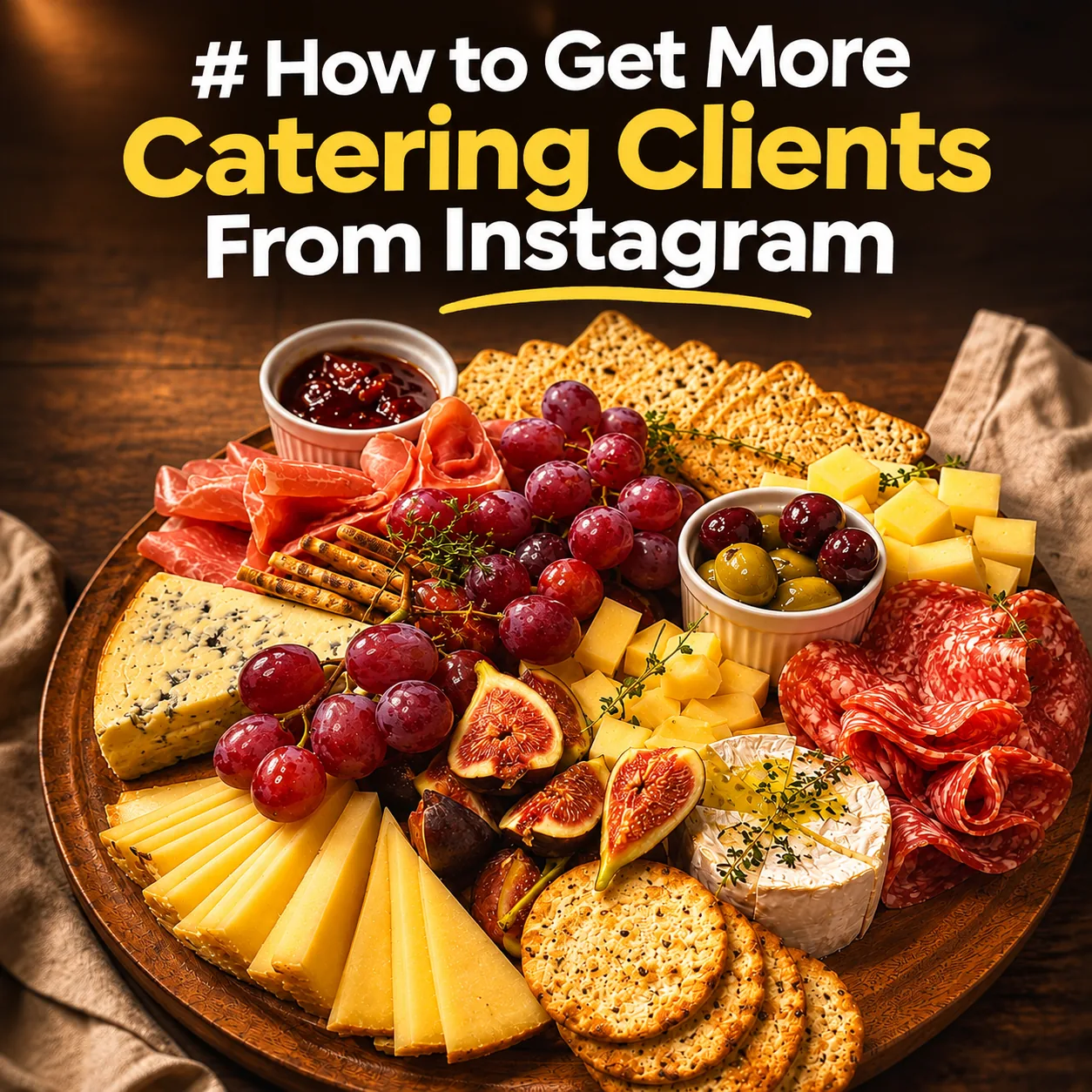
It is 10:40 on a Tuesday night, and someone planning a 60-person retirement party has three caterers open in three tabs. Yours came recommended, but your catering Instagram shows a foil pan under a fluorescent light and a post from March that says "Busy weekend!" They close your tab and message the caterer whose grazing board looks like it belongs at a party they would want to attend. If you have ever wondered how to get more catering clients from Instagram, that moment is where the answer starts.
Why Instagram Is Where Catering Clients Check You Out
Catering clients rarely book on a first impression. They hear your name from a coworker who ate your sandwiches at a training day, or from a cousin's wedding, or from a search. Then, before they pick up the phone, they open Instagram and scroll.
They are not browsing for fun. They are checking whether you can be trusted with an afternoon that matters to them: a board meeting, a 40th birthday, a christening lunch for 80. Your account is your portfolio, and it has one job. It has to show that your food looks good at an event, in front of guests, because that is what the client is actually paying for. The taste they will find out later. The look is what they judge tonight.
Why Catering Food Is Hard to Photograph
If your photos have never brought in a booking, it is probably not your food. Catering is one of the hardest kinds of food to shoot well, for reasons that have nothing to do with how good your cooking is.
Foil and steel get in the frame. Half of what you serve travels in aluminum pans and sits in chafing dishes. They reflect every light in the room and pull the eye away from the food. A tray of lemon-herb chicken thighs looks very different on a wooden board than it does in a dented half-pan with a sterno can in the corner.
Venue lighting works against you. Community halls, office break rooms, and hotel function rooms are lit for safety, not for food. Overhead fluorescents turn greens gray. Warm pendant lights turn everything orange. You do not get to choose the room.
Food sits out. By the time guests are seated and you have a minute, the salad has wilted, the glaze has dulled, and the cheese has started to sweat. The food still tastes right, but it has lost the fresh shine it had when it left your kitchen.
The wide shot hides everything. The instinct at a big buffet is to step back and capture the whole table. On a phone screen that becomes 14 small shapes, none of them readable. A client cannot tell your short rib from your roasted carrots.
You are shooting on the clock. On a Saturday you are loading the van at 7, setting up at 10, and serving at 12. Photos happen in the 40 seconds between lighting the burners and the first guest walking in. Nobody has time to restage a tray.
This is the gap Feedtray was built for. You upload the photo you already took, and in one click it corrects the lighting, brings back true color, and cleans up the background. It works on your real food, so the board in the photo is the board the client will get. For the shots you still take yourself, these habits help: how to take better food photos for Instagram.
The Four Posts That Win Catering Clients
You do not need to post every day. You need four kinds of posts, repeated well, so that anyone who lands on your grid can answer three questions in under a minute: what does the food look like, what can I book, and how do I ask. Here is each one, written out the weak way and the strong way.
The hero platter. This is one tray or one board, shot close, filling the frame.
Weak version. Photo: the whole buffet from the doorway, 12 dishes, two chafers, a stack of plates, and a guest's elbow. Caption: "Set up for today's event! 🙌 #catering #foodie"
Strong version. Photo: a single rectangular board shot from slightly above, filled edge to edge with prosciutto folded into ribbons, a wedge of aged gouda, honeycomb, red grapes, figs cut in half, and rosemary crackers. Caption: "Our Harvest Board, the one that empties first at every party. Aged gouda, prosciutto, honeycomb, fresh figs, grapes, and our house rosemary crackers. Serves 20 to 25 as a starter, $185, delivered and set up anywhere in the county. Tap the link in bio to check your date."
The strong post shows one thing clearly, names it, says how many it feeds, gives the price, and points to the next step. A client can picture it on their own table.
The menu package. Most catering accounts hide the menu behind a DM. Clients comparing three caterers at night will not message all three to find out if you are in their budget. They will book the one who told them.
Weak version. Photo: a logo on a plain background. Caption: "Catering available for all occasions! DM for pricing 📩"
Strong version. Photo: the actual spread for this package, shot on a clean table: a tray of grilled chicken skewers, a large bowl of orzo salad with feta and cucumber, a basket of warm pita, a bowl of hummus, and a tray of lemon bars. Caption: "The Office Lunch package, our most booked menu. Grilled chicken skewers, lemon orzo salad, hummus with warm pita, a green salad, and lemon bars. Minimum 15 people, $22 per person, includes plates, napkins, and setup. Vegetarian swaps at no extra cost. Most weeks we can do Tuesday through Friday with 48 hours' notice. Request a quote through the link in bio."
Naming the package matters. "The Office Lunch" is something a client can say to their manager. "Catering" is not.
The event recap. This is your proof that you can handle a real event, start to finish. Shoot it the way a guest would see it, not the way you see it from behind the table.
Weak version. Photo: a blurry shot of the kitchen after service with empty pans stacked on the counter. Caption: "Had a great time at the party last night! Thanks for having us!"
Strong version. Photo: a long table set for dinner, candles lit, family-style platters of braised short rib, roasted carrots with dill, and charred broccolini, with guests' hands reaching in at the edge of the frame. Caption: "Priya and Tom's anniversary dinner, 45 guests in their back garden. Family-style braised short rib, roasted carrots with dill yogurt, charred broccolini, and a chocolate olive oil cake to finish. Priya told us afterward that three guests asked for our number before dessert. If you are planning a dinner party for 30 to 60, our Garden Supper menu starts at $58 per person."
One note before you post a recap: ask the client first. Get their permission to use their name, and get it for any photo where a guest can be recognized. A short message the week after the event is enough, and most happy clients say yes.
The booking window. Catering is booked weeks or months ahead, and many clients do not realize how fast weekends go. Telling them honestly what is left is useful information, not a sales trick.
Weak version. Photo: a stock-style image of a calendar. Caption: "Book us for your next event! 🎉"
Strong version. Photo: your best hero platter from the past month. Caption: "Two Saturdays left in May: the second and the last. Weekday office lunches are still open most of the month. Graduation parties for 40 to 100 start at $28 per person for our Backyard Spread: pulled pork sliders, smoked chicken, mac and cheese, slaw, and cornbread. Send your date through the link in bio and we will reply the same day."
Only post the dates that are genuinely open. If a client books the second Saturday and finds out you had six free ones, you have spent the trust you were building.
The caption is half of each post. For more on writing ones that lead somewhere: how to write Instagram captions for restaurants that actually get clicks.
Turn Your Catering Instagram Into an Inquiry Machine
Good posts get a client interested. The rest of your profile decides whether that interest turns into a quote request or a closed tab.
A bio that answers the booking questions. A client should know in one glance what you cater, where you go, and how to ask. "Event and office catering across the Tri-Valley. Drop-off trays, parties for 20 to 150, small weddings. Get a quote below." That is more useful than a tagline about passion and fresh ingredients.
A link that goes straight to a short inquiry form. Not your homepage, and not a page of every service you offer. Send people to a form with four fields: event date, headcount, location, and rough budget. Those four answers tell you whether the job fits before you spend a minute on it, and they tell the client you know what you are doing.
Highlights that work like a sales folder. Set up four: Menus, Past Events, Client Reviews, and How to Book. Menus holds your named packages with prices. Past Events shows recaps by type, so a bride and an office manager can each find something that looks like their day. Client Reviews holds screenshots of thank-you messages, with permission. How to Book walks through your process, deposit, and lead time.
Fast replies to DMs. Clients planning an event often message several caterers on the same evening and go with whoever answers first with something useful. Event venues have measured this: in a 2021 EventUp survey of 500 consumers, 92% said they wanted an event venue to respond to their inquiry within 48 hours. Caterers are working against the same clock. Save a reply template with your packages and the form link so you can answer from the van.
Your Google listing matters too. Many clients find you on Google first and check Instagram second, or the reverse. Make sure both tell the same story, with the same photos and the same way to book: how to set up your restaurant's Google Business Profile.
What the Difference Looks Like
Here is the same grazing board, built in the same kitchen, shot on the same phone. Nothing about the food changed. What changes is whether a client looks at the photo and thinks, this is what I want on my table.
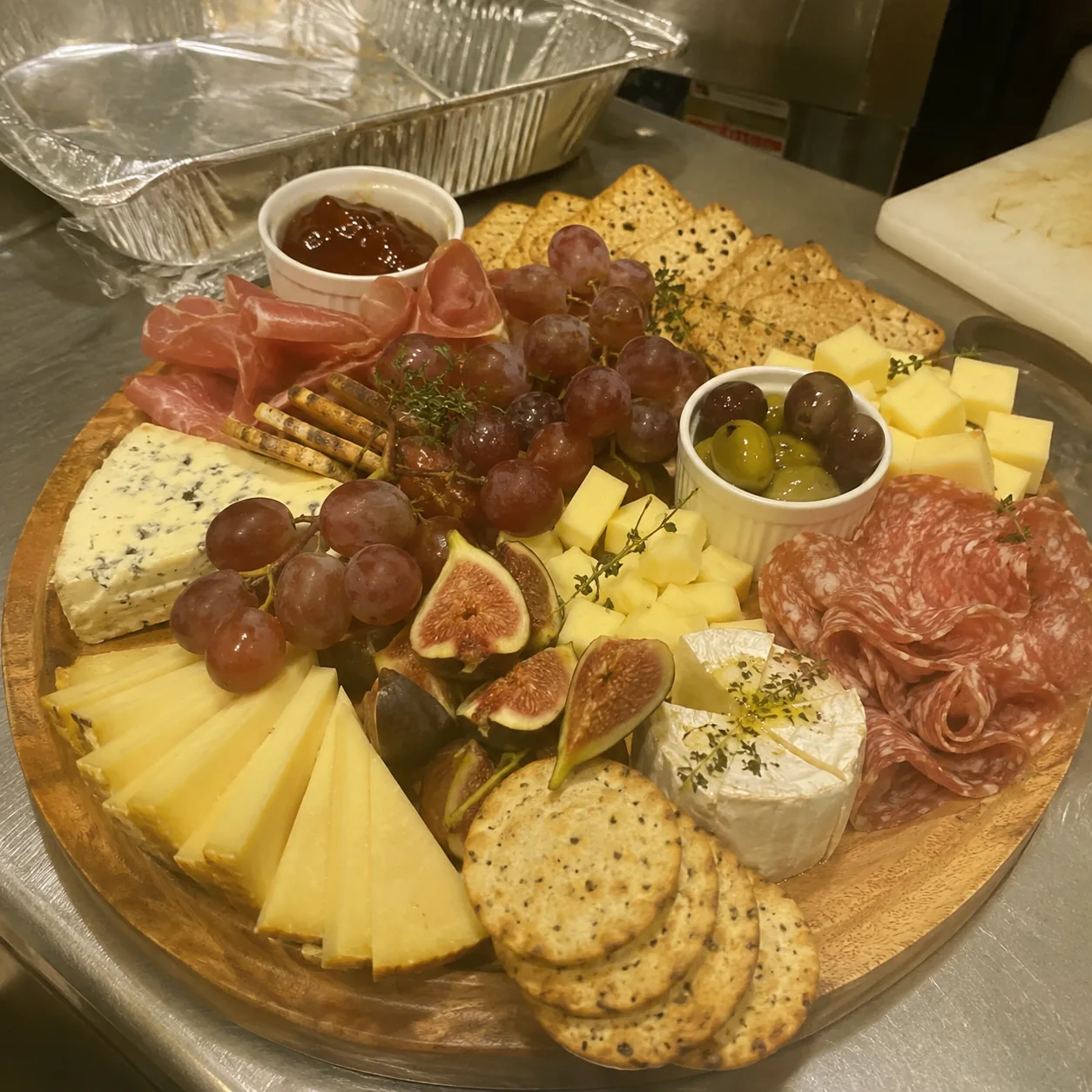
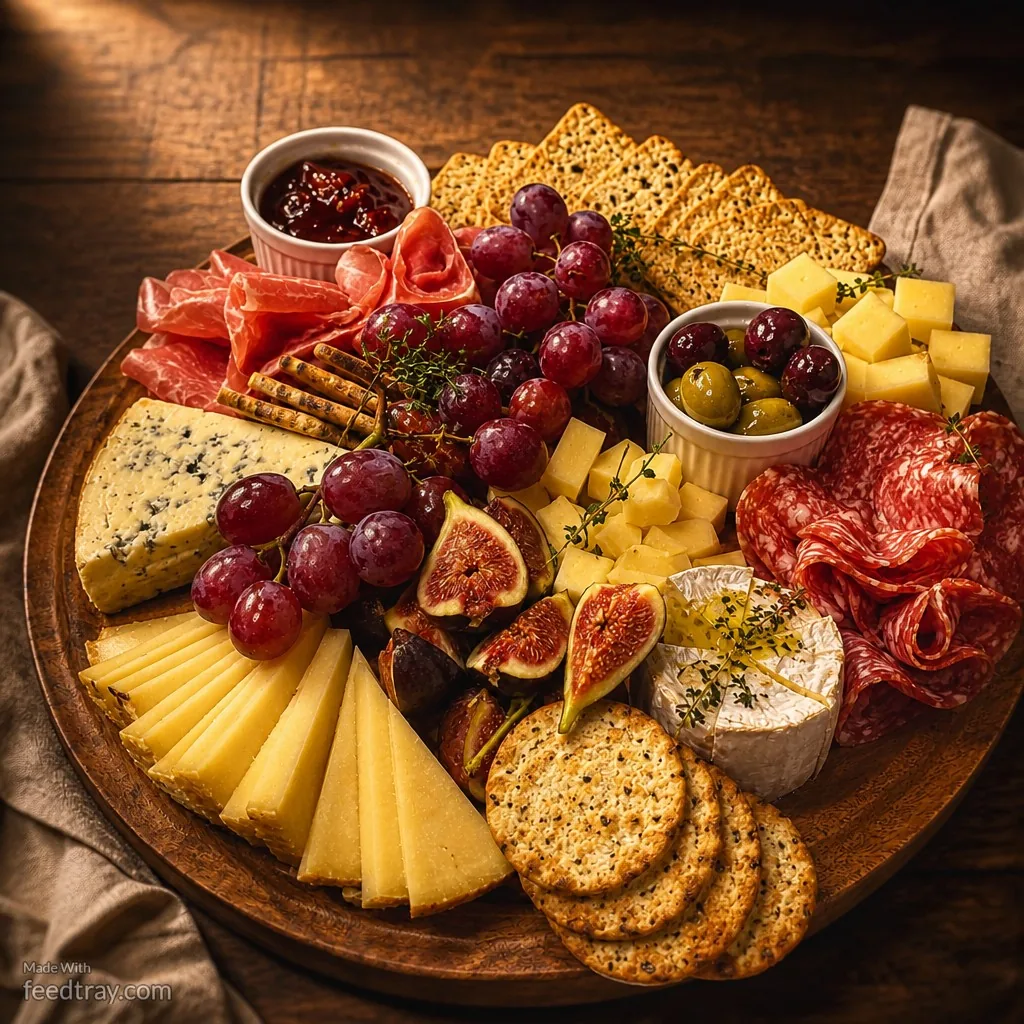
Before and after grazing board photo enhanced with Feedtray showing how to get more catering clients from Instagram
The second one is the photo that gets the quote request.
Clients book the caterer who looks sure of themselves, and your Instagram is where that confidence shows first, long before the tasting or the deposit. The caterers winning bookings here are not posting more than you. They are posting food that looks like the event the client is already imagining, with a clear menu, an honest calendar, and an obvious way to ask. That is how to get more catering clients from Instagram: make the next person who scrolls your grid at 10:40 on a Tuesday stop scrolling and send you their date.